Geri Reilly Real Estate Logo

House & Home

Making the Most of Holiday Leftovers

The holidays mean food, family and more food. So when you're left with a heaping portion of leftovers keep these tips in mind.

Seal for Safety

Make sure all leftovers are put away in air tight containers. Most foods will stay fresh for up to seven days but if it starts to smell off or funky don't take


Feast now so you can feast later!

Feast now so you can feast later!


a risk, just throw it away. Many foods, such as soups, cooked vegetables, breads, pastries and cookies, can last even longer when put in the freezer and will come out just about as good as fresh.

Be Creative

Veggie leftovers have many wonderful uses, try them in omelets and quesadillas or throw them on top of a frozen cheese pizza. Chilled veggies make a wonderful addition to a basic salad and can also be made into a soup when run through a food processor.


The Monte Cristo: A heavenly way to enjoy ham leftovers!

The Monte Cristo: A heavenly way to enjoy ham leftovers!


The Sandwich

It's no secret that leftover meats make for stellar sandwiches but take your sandwich over the top with extra flavorful condiments. Try adding cranberry sauce to mayonnaise, using deviled egg filler as a spread over fresh veggies or even turkey, ranch added to sriracha makes an unexpectedly delicious addition to a basic sandwich, or take a tip from the monte cristo sandwich and try grilling a traditional ham and cheese sandwich and dipping it in yummy sweet jam.

Leftover don't have to be a burden, consider it an extended vacation from cooking.

Happy Holidays from all of us at Geri Reilly Real Estate!


Christine, Bryce, Carolyn, Kim, Geri and Mike

Christine, Bryce, Carolyn, Kim, Geri and Mike


Building Equity in Your Home

Buying a home is a great way to improve your family's financial security. The main way this happens is through home equity.

What is equity?

The equity in your home is the difference between its market value and the balance on your mortgage. In other words, equity is the wealth built up in your home over time. If you could sell your home for $400,000 and the amount you owe on your mortgage is only $100,000, then your equity is $300,000.

Equity is built in three ways: down payment, mortgage payments, and market gains. Making a down payment is a reduction in your mortgage amount, giving you instant equity in your home. Making house payments increases your equity as well, since every payment includes a portion for interest and a portion that reduces the amount of your loan amount (called the principal). Over time the amount of your payment that goes toward the principal increases and helps to build your equity even faster.

Market Value Appreciation

You also build equity as your home gains in value over time; this appreciation in market value can mean that you build equity simply by owning your home. Of course there are no guarantees that real estate values will continue to rise, but historically this has been the case. If your home is worth $250,000 and the market appreciates by 5% each year then after just two years you could add $25,000 in equity simply by living there.

Equity doesn't have to be an abstract concept; you can turn it into cash by applying for a home equity loan which uses the equity in your home as security and in many cases allows you to deduct the interest from your taxes, just as you do with your first mortgage. Home equity loans are usually a cheaper source of funds than other types of credit (credit cards, for example) and can be an excellent way to pay for home renovation or to consolidate debt.

Pick up more Real Estate tips at http://www.buyvtrealestate.com/geri-reilly-real-estate-tips/

Enhanced by Zemanta

Decorating for a Small Space

For first time homebuyers and baby boomers looking to downsize, condos and smaller homes can be a viable option. 

They require less maintenance and support a more financially and environmentally sustainable lifestyle making them attractive to both the budget conscious and those with an active, socially aware lifestyle. Still the question inevitably arises, where do I put all my stuff? Here are some tips for decorating and visually "enlarging" small spaces.
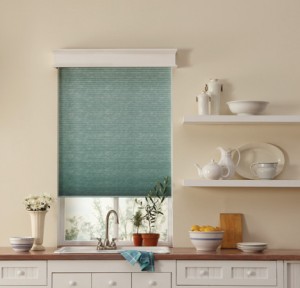
These cellular shades add style but not bulk!

Windows

When dressed correctly, windows can be a strong tool for visually enlarging a small room. Leave windows bare or dress them with draperies that match the color of the walls to open the space. For privacy, install simple shades or blinds that can be pulled out of the way during the day. In addition, to make windows seem taller, hang draperies just below the ceiling; to widen windows visually, extend draperies beyond the window frame.

Furniture

If your space is too small to meet all your needs, make it multi-task. A sofa bed is a great way to accommodate guests without a guest room. For more storage hang floating wall shelves in favor of standing shelves. Use an ottoman with storage inside to hide away papers and knick-knacks. And choose a drop leaf table with wheels that can expand to accommodate more diners or partially collapse and be easily moved out of the way when not in use.

Small spaces are quickly overwhelmed by large or overstuffed furnishings. Choose neatly upholstered pieces with compact frames and slimmed-down, leggy pieces without skirted bottoms that allow you to see through them to the walls and floors.
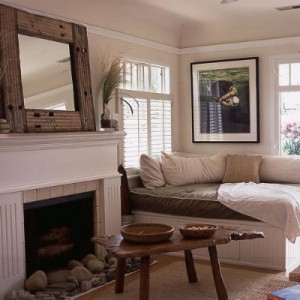
The epitome of small space comfort, a day bed.

Create a sense of movement and make a room feel larger by floating big furnishings away from walls. Allowing air space between the wall and seating pieces gives the impression of depth and more room. Another option is to place furniture in the corners of rooms at an angle and use the space behind to stash baskets of extra linens, toys, crafts supplies, or whatever else you need to store.

Add round elements to a small, square room. Soft edges, instead of rigid corners, turns small into cozy.

Accessories & Color

To give a room the illusion of spaciousness use white or another light color on the walls. White surfaces bounce light around the room, keeping a small space feeling bright and open. Use dark accent pieces to anchor the space without constricting it. And don't underestimate the power of a few well placed mirrors!

When it comes to small spaces, too many colors can be chaotic. Select a few and stick with them. Painting the single wall a dark color also creates the illusion of

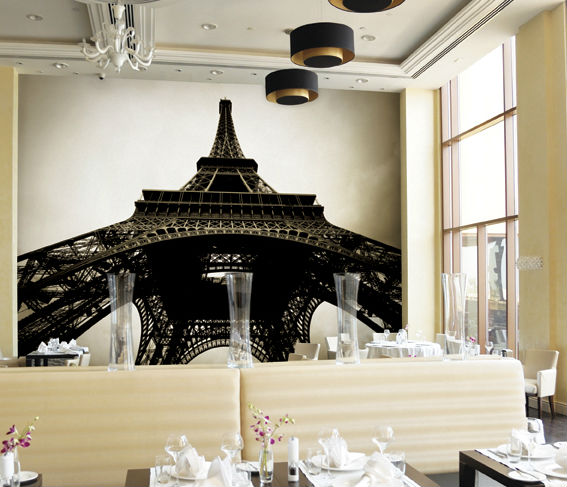
Go big and go...home!

depth in the room. And be careful not to fill a small room to the brim with accessories. A handful of well-chosen and well-placed accessories is all it takes to give a small room a layer of sophistication.

One oversize piece of art can create a strong focal point that actually opens a small room. To the contrary, multiple pieces scattered around the room make the room feel cluttered and small.

Small spaces have every bit as much potential as larger spaces, they just require a different mindset. But what they lack in size they make up for in comfort and coziness, so have fun and explore all the creative ways there are to dress up and diversify the functionality of your home!


187-189 of 214 Posts